

What Shared Living Taught Me About Making Room for Others
I have lived with strangers. I have lived with family. I have navigated shared kitchens, unspoken rules, and the quiet tension that builds when people share space without enough structure or communication to hold it together. Here is what those rooms taught me — and why they shaped everything Room for Life is built on.
Mischere V. Kyles
7/7/20265 min read
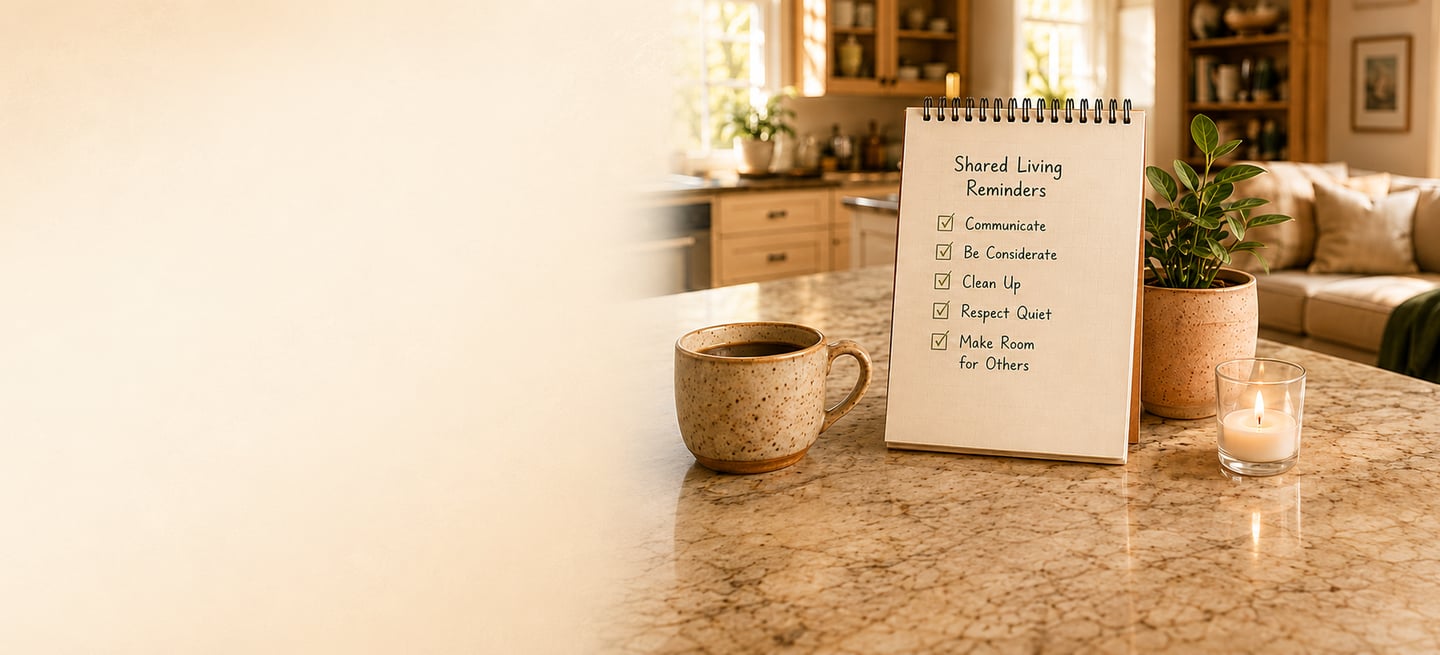
The room was small. The lessons were not.
I did not grow up thinking I would spend a significant part of my adult life in shared living situations. I did not plan for it. I did not choose it as a lifestyle. I moved into shared spaces because life asked me to — because starting over, building stability, and making things work financially sometimes means sharing a kitchen with someone you just met and figuring out the rest as you go.
What I did not expect was how much those spaces would teach me.
Not just about logistics. Not just about whose turn it was to clean the bathroom or how to navigate a passive-aggressive note left on the refrigerator. But about something deeper — about what it actually means to make room for another person's life while still making room for your own.
If you have ever lived in a shared space you know this already.
The dishes are almost never really about the dishes. The dishes are about the person who assumed someone else would handle it. They are about the person who grew up in a household where cleaning happened a certain way and never thought to ask whether their housemate grew up the same. They are about the conversation that never happened before the first night was spent under the same roof.
Most shared living conflicts are not about personality clashes. They are about unspoken assumptions — about cleanliness, about quiet hours, about guests, about what it means to respect a space that belongs to more than one person.
I lived this. I watched it play out in homes I shared with strangers and homes I shared with family members I loved. And I learned something that has shaped everything I do now:
Structure does not kill community. It protects it.
When people know what is expected — when the conversation has happened before the tension builds — shared living actually works. People feel safer. They communicate better. They show up differently in a space when they understand what the space asks of them.
When the conversation has not happened — when everyone is just hoping for the best and assuming the other person sees things the same way — the smallest inconvenience becomes a source of real friction.
The kitchen is never just about the dishes.





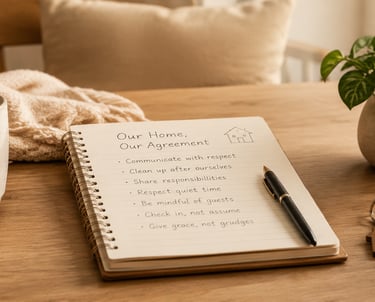


Living with family is its own education.
There is a particular kind of challenge that comes with moving in with family — a sibling, a parent, a cousin, someone you love and have known your whole life.
You assume it will be easier. You know each other. You care about each other. Surely that is enough.
It is not enough.
Love does not replace communication. Familiarity does not replace clear expectations. And the longer you go without having the real conversation — about cleaning, about money, about schedules, about guests, about what happens when one person's habits start to affect the other — the harder that conversation becomes.
I have seen family relationships strained and sometimes broken by shared living situations that started with the best of intentions and ended with things left unsaid for too long.
The lesson I took from those experiences is one I now share with every person who asks me about moving in with a family member:
Have the hard conversation before you move in. Not after the first conflict. Before.
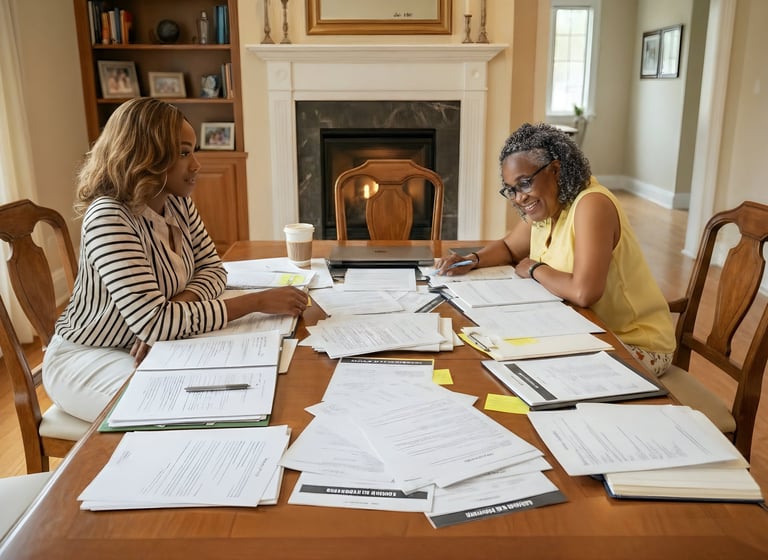
Ask about cleaning standards. Talk about guests. Discuss what quiet means to each of you. Put things in writing if it helps — not because you do not trust each other, but because clarity is an act of respect. It says I value this relationship enough to protect it before something threatens it.
What I learned about making room for others.
Here is what those years of shared living taught me about what it actually means to make room for another person:
It means showing up with awareness — not just of your own needs but of the fact that you are living in proximity to someone else's life. Their schedule. Their stress. Their habits. Their history.
It means having conversations you might prefer to avoid — about expectations, about boundaries, about what you need and what you are willing to give.
It means understanding that your room is your space but the kitchen, the living room, the bathroom, and the hallway belong to everyone who lives there. And everyone who lives there deserves to feel like they belong there.
It means recognizing that shared living is not just a housing arrangement. It is a daily practice in communication, boundaries, and grace.
And it means — perhaps most importantly — that you cannot assume the person sharing your space sees things the way you do. They grew up differently. They learned different things. They have different standards and different needs and different ideas about what a home should feel like.
That is not a problem to solve. It is a reality to navigate — with honesty, with structure, and with the willingness to make room not just in the physical space but in the conversation.

Why this shaped Room for Life.
Room for Life was not built in a classroom or from a textbook. It was built from rooms I actually lived in — from the lessons those rooms taught me about structure, communication, and what it takes to help people coexist with more peace and less friction.
The Shared Living Readiness Checklist we offer as a free tool exists because I wished something like it had existed when I was navigating my first shared living situation. The house rules templates and communication frameworks inside the Rental Ecosystem Support pillar exist because I watched what happened when those things were missing.
Everything in Room for Life that touches shared living came from lived experience — not theory.
And the thread that runs through all of it is this:
Making room for others starts with making things clear. Clear expectations. Clear communication. Clear boundaries. Not because shared living is a legal arrangement to be managed but because it is a human experience to be respected.
The rooms I lived in taught me that. And I am still learning.

If this resonates with you:
If you are preparing to move into a shared living situation — or if you own a shared space and want to build better systems and communication — the Room for Life free tools are a good place to start.
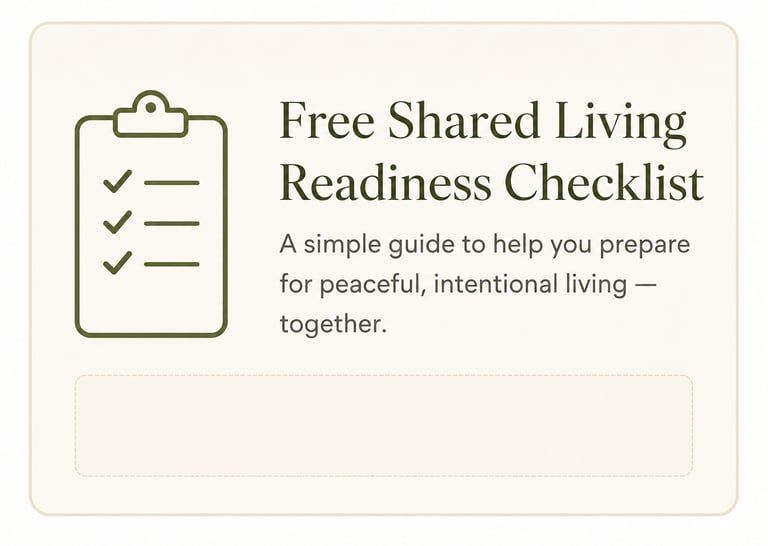
The Shared Living Readiness Checklist walks you through the conversations to have, the questions to ask, and the things to get clear on before you move in or move someone in.
It is free. It is practical. And it comes from someone who has lived in those rooms.
Download your free copy at mischerekyles.com
© 2026 Room for Life with Mischere Kyles. All Rights Reserved.


Room for Life
About
Support
Room for Life resources, videos, tools, books, and support services are for educational, reflective, and organizational purposes only. Mischere Kyles is not a lawyer, therapist, psychiatrist, financial advisor, or medical provider. Please seek qualified professionals when needed.
For Homeowners
Shared Living Resources
info@mischerekyles.com
Better systems create more room for people to live well together.
________________________________________________________________________________________________